This question comes up all the time from chinchilla owners, as it rightfully and naturally would. Should I get another chinchilla for my existing chinchilla(s)? Is my chinchilla lonely? Does my chinchilla deserve a playmate? Cage mate? Best friend?
The answer, unequivocally, is no. Well, it’s no and yes. Let me explain! If you are a current chinchilla owner, you know that chinchillas are unique animals that are a true gift to the world! They have one-of-a-kind personalities with their own cute idiosyncrasies, adorable quirks, and delightful oddities that are distinct to each individual pet. This allows us to come to a few conclusions: 1. Chinchillas are particular, 2. Chinchillas are individualistic, and 3. Chinchilla behavior can sometimes be categorized as inexplicable. These reasonable conclusions – along with the fact that chins can be territorial – show us that the odds of one chinchilla getting along with another chinchilla is slim (depending on your chinchilla’s personality, of course).
 This is not to say that chinchillas can’t be properly introduced over time and come to be great mates – it’s only to say that your chinchilla does not need another chinchilla to live a long, happy life. This is a main point to consider. In my personal experience, every single one of my chinchillas (with the exception of the mosaic sisters Lulu and Fifi) live alone in their own cage and are living a healthy, satisfying existence. Do I wish they got along? Of COURSE! Did I try to bond them within reason? Definitely! Do I still have dreams? Forever and always. It’s my dream for all my babies to cuddle up and coo at me. However, it’s only a dream – that’s my reality, and that’s okay.
 The only reason you should get another chinchilla is because YOU – as a responsible, capable owner – want to take on the duty of another precious life in your home. That means double the mess, double the work, double the expense, double the personality, and double the adorable joy that comes from each and every chinchilla. Be aware that your decision will impact YOUR life, your existing chinchilla’s life, and your new chinchilla’s life as well. The main focus should be the well-being of your pets, despite their ability to cohabitate.
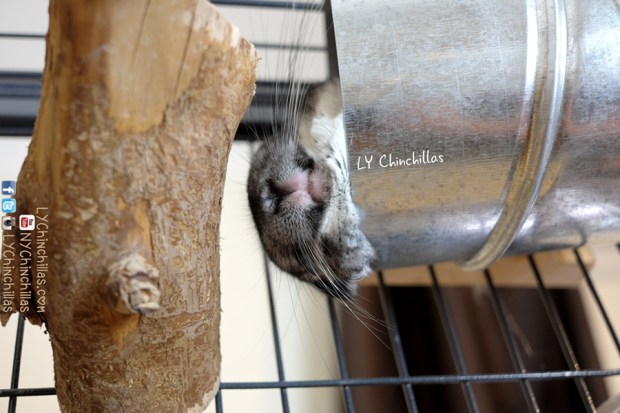 So, let’s say you’re ready to take the next step: another fluffy baby in the household! Great: congratulations for coming to this decision based solely on your willfulness to take on another chinchilla, understanding the great probability that he or she may not be able to live amicably with your current chinchilla. Bravo! What’s next? Firstly, if you have intentions to house your chinchillas together, you must purchase a chinchilla of the same sex (unless one of them has been fixed). Then, be sure to purchase all the necessities your FIRST chinchilla required: new cage, water bottles, shelves, hammocks, accessories, food bowls, and fleece! Do not pick up another chinchilla without first getting all the essentials that he or she may need. Never assume you can just plop him or her in with your existing fluffball – that could have devastating consequences for either or both babies. It’s also good to brush up on the basics for each new chinchilla, as no two are alike.
 Then, you can introduce your chinchillas slowly to one another, placing their cages near one another to allow them to get accustomed to new smells and the new presence. I won’t go into the controversial topic of talking about how exactly to introduce your chinchillas, as there are plenty of suggestions out there and very strongly opinionated owners. The safest way that I have found is to place them in proximity to one another with a barrier and allow them to react to one another without having to fear for their safety. Based on their reactions initially and over time, you can safely determine how they might react with one another. In my experience, my boys got along until the ladies arrived, and the ladies never got along with one another (aside from the sisters, of course). I would never consider housing the males and females together because none of them are fixed, and I don’t have the capability to take care of any kits with my very full-time job if anything were to go wrong with the birth. I can’t stomach the idea of losing any of my existing babies, even to their babies.
What I’ve learned is that my chinchillas are generally solitary animals, and I am their best human friend. I clean, scratch, and provide emotional support to them (oft via song), and they have shown me time and time again that they don’t need – and never needed – another chinchilla friend for them to live a loved, loving life. No, your chinchilla is not lonely or lacking. Are they bored sometimes? Maybe. But that’s what stimulating cages, safe chews, and occasional treats or playtimes are for! You can provide a beautiful, fulfilling life for your chinchilla – never doubt that. They do deserve a great mate, and I’m certain they can find that in you.
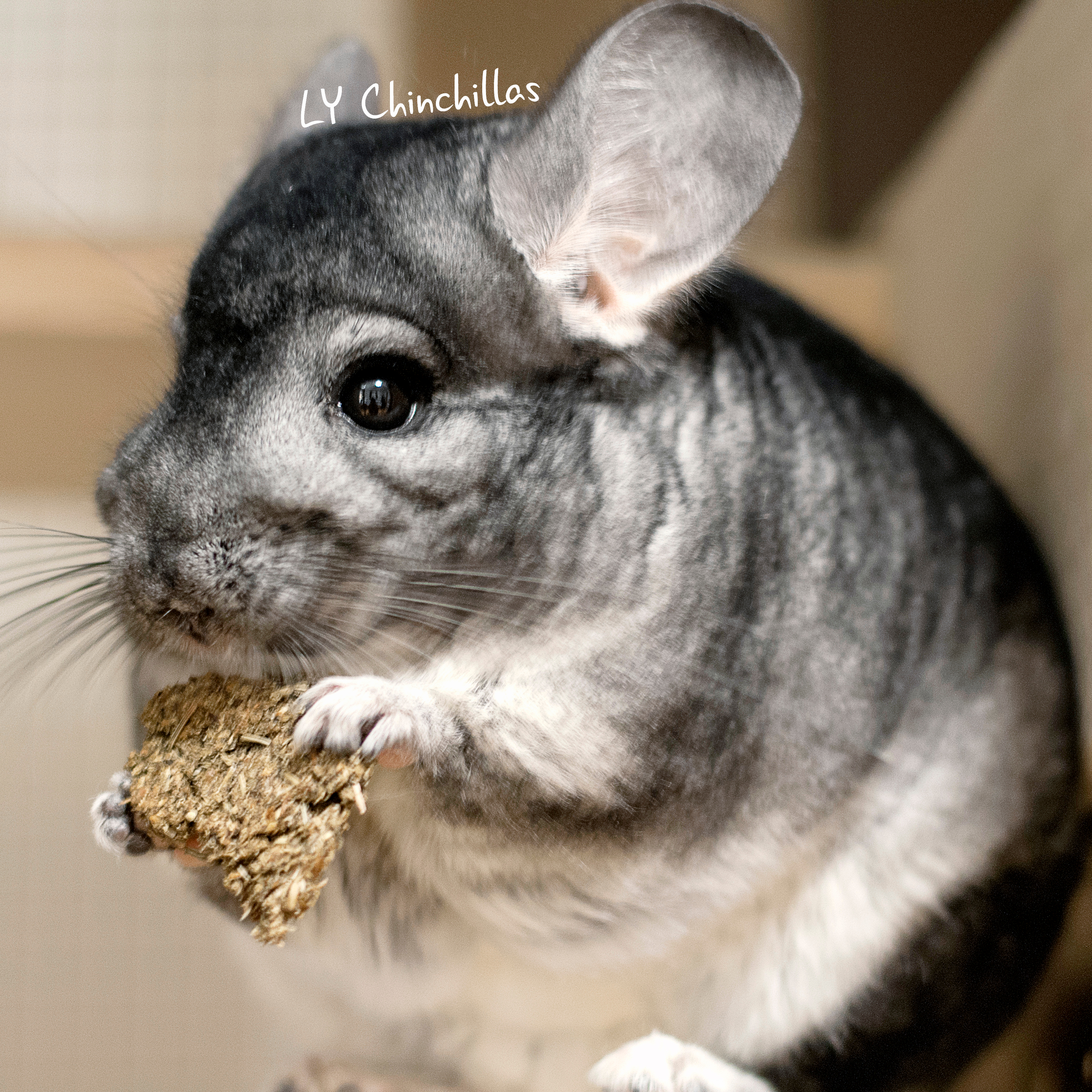
LY Chinchillas Treat Donation
Donate healthy, delicious treats to LY Chinchillas to help keep our content going!
$5.00
 The very first thing to check prior to starting the shoot is the chin-proof factor. Admittedly, the actual time on set is very short – and the rest of the time is spent coaxing your little one back on set or sending them back to their cage to nap off a hard 10 seconds of work! In those off-set moments, you’ll need to make sure that everything is completely chin-proofed to prevent any accidents, fur loss, or injury.
 The next thing you’ll want to check are your ambient light sources – that means your natural light, ceiling lights, desk lights, lamps, floor lamps, whatever other illuminating tools you may have in the shooting area. This will help capture your chinchilla by allowing you to have a faster shutter speed due to more available light. Normally, I prefer a clean white light, but for the holidays, there’s nothing wrong with a warmer glow that comes standard in most home lighting.
 The third step is to create your set: start out with a fun, safe idea and execute! Fleece is always great, but other textures can be visually pleasing too. For my holiday shoot this year, I went with simple silver and white tree decorations, along with a chunky knit sweater. It’s important to note that these decorations are obviously not safe for consumption, so I would not suggest this for anyone who is starting out with shoots; managing the talent on set is a huge part of the multitasking these types of productions require!
 The final step is to shoot away! I like to set up the scene, get the lights on, take a few test shots, and then plop them in one by one to see how they react. Normally, my chins are very confused at the new environment, so they’ll take 10 seconds to look around before dashing off. Those 10 seconds are crucial! With a fast continuous shooting mode, you can grab up to 8 images per second – more than enough to finalize at least one adorable final shot.
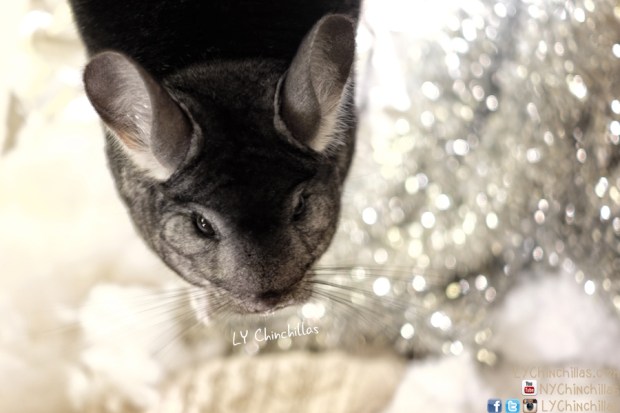 Knowing your chinchillas, staying very patient, and setting realistic expectations is key: after shooting for years with them, I know that Fifi will be tough to contain (she has a strong dislike for unfamiliar environments) – so during this year’s shoot, she slipped out of the roster by her own sheer determination. Remember, it’s your own selfish cute-loving self who happens to be encouraging them to pose for adorable photos, so never get frustrated if things aren’t working out. If someone is being a diva, simply save the shoot for another day. Or, if you know a shoot is coming up, hold off on
 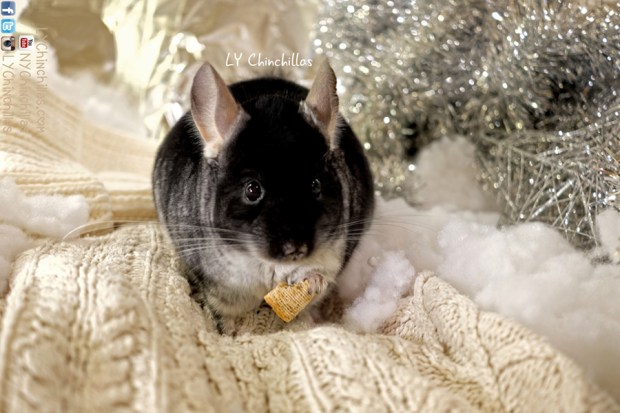 Don’t be apprehensive to reinvent the concept if needed. Sometimes, simple is better. A fleece backdrop and a chew stick can yield incredibly cute shots, too! Staying basic is an awesome way to start learning how your chins will behave in front of the lights and camera. It’s always truly just a buildup of trust, anyhow. We all wish you a very warm and happy holidays with tons of bonding and photography, sweet friends!









 LY Chinchillas