love

Get To Know: Lulu

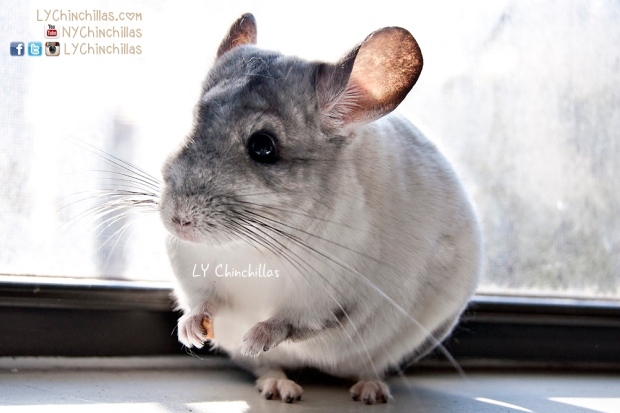
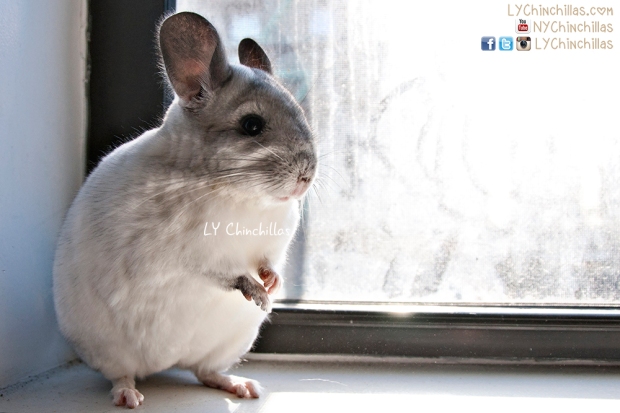
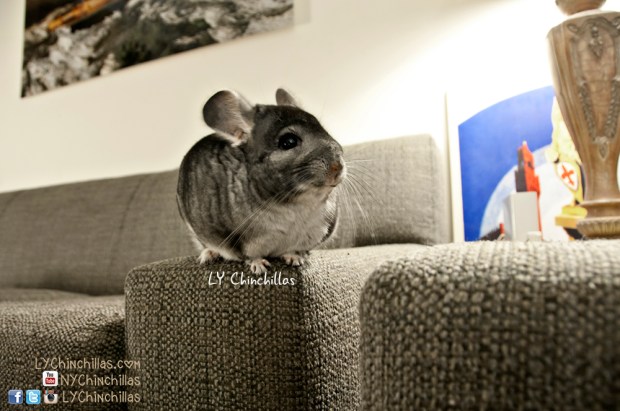
LULU [my graceful chubster] AKA Lululumon, FattyLoo, Lu, Fatty

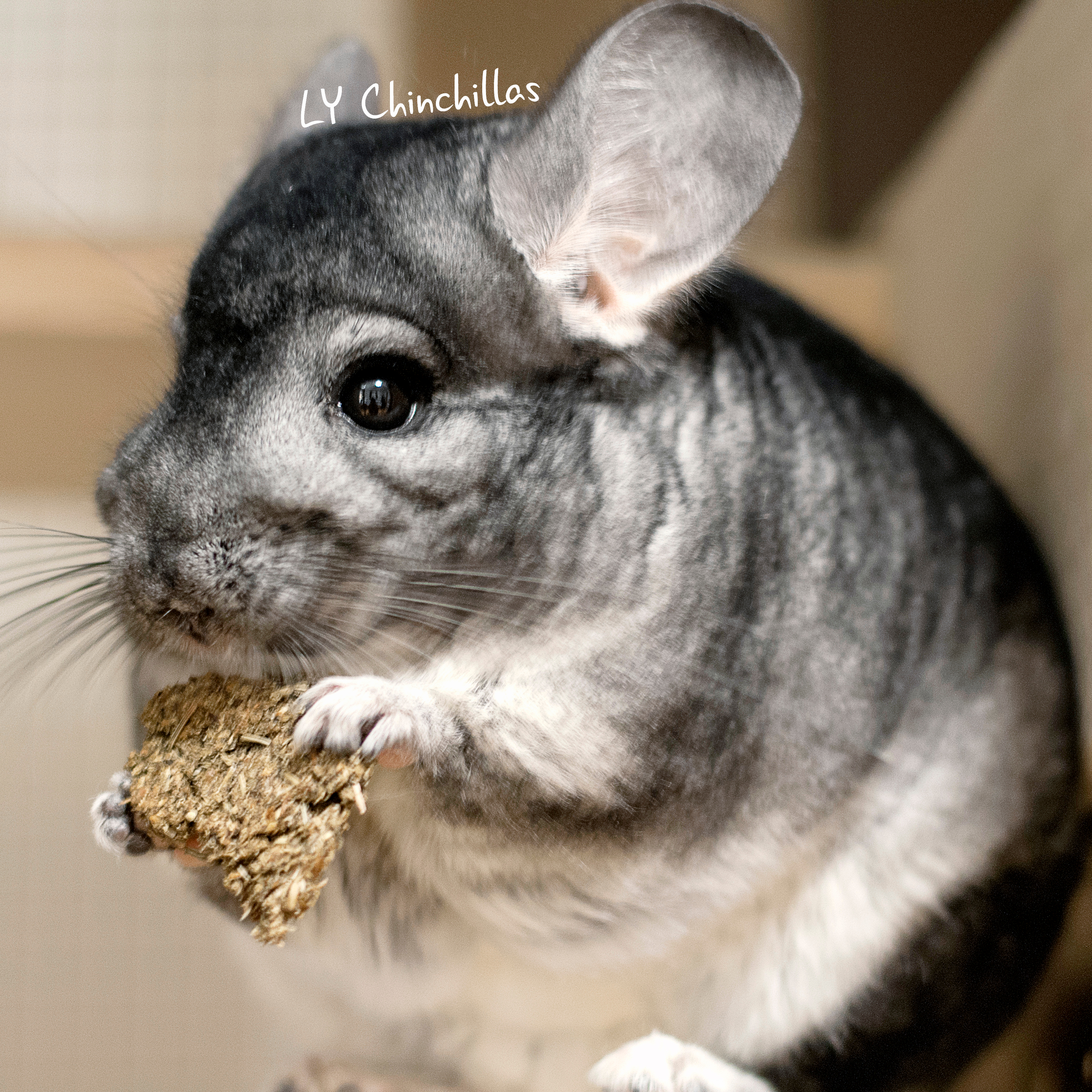
Mosaic,Β Born 08/21/2013, approximately 800 grams

Lu Loaf

Role in Playtime Kingdom? Graceful little queen bee! Lulu prances around like a beautiful butterfly, making jumps gingerly and landing them with a cute twirl and smile. Such a debutant!

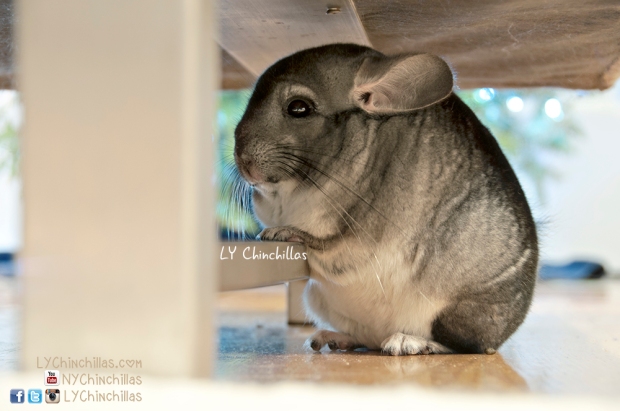
Favorite Hiding Place? Under the filing cabinet, just like Muff! But since it’s been long blocked off, little lady Lu enjoys spending time out in the open, roaming about like a curious princess.

Lulu Standing

Physical Capability? Oblivious grace! Lulu has the luck of a true happy-go-lucky darling. She’s also an occasional high jumper!

Vocal? Not really! Lulu is very quiet, like a fat stealth machine. She’ll only squeak on very rare occasions, like when her sis Fifi overdoes the midnight cage sprints.

Human Cuddle Status? Lu gets all her cuddles in with her sister, so she doesn’t need any human snuggles. Power to the semi-independent woman! She will accept light petting, but not a fan of scratches or massages.


Favorite Way to Be Picked Up? This lady is a queen, and expects full support from the torso, legs, and base of the tail. She will not lift a paw to help you in the process, although when she’s in the carriage, she’s a happy traveler.

Lulu Holding

Intelligence? Two words: Space. Case. Lulu is extra sweet and adorable, with her eyes a bit closer on her head than the other babies and her unique spots on her back, she’s a real catch! The boys love her, and so does everyone who meets her. But this little girl’s in her own universe! I don’t blame her at all; sometimes, ignorance is bliss. πŸ™‚


Is She Compatible with Other Chinchillas? For the most part, yes! Lulu gets flirts left and right from both Muff and Mitty! They have the biggest crushes on her and offer her endless kisses and grooming sessions (supervised, of course). Fifi, her sister, loves to cuddle with her and spend quality cage time together. Her one nemesis, it seems, is young Koko Bear! She can’t stand the way Koko smells, and becomes quite aggressive when she comes into any contact with the new girl’s scent.

Lulu getting kisses

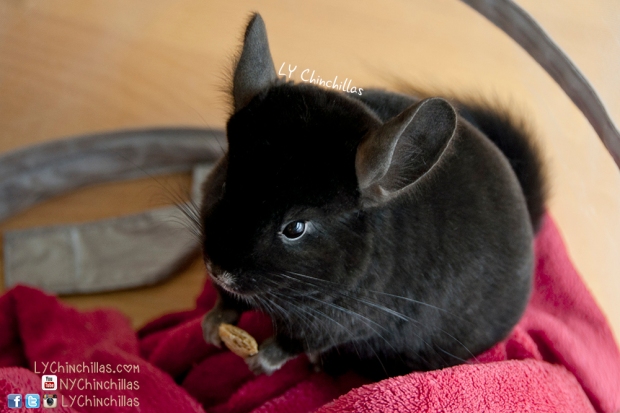
Ready for a Photo Shoot? Due to her ditz, Lu is perfect on set! It typically takes her a while to realize where she is, and if there’s a little treat in the picture, she won’t even care when she figures it out. I mean, she’s no docile Koko Bear, but she’s definitely second in line when it comes to being workable on set!

Lulu 1K

Love to Dust? Just like Muff, Lulu can’t get enough of the dusting -she’d live in dust if she could, I’m sure of it.

Three Words/Phrases to Sum Up Her Personality? Lost in Her Own World, Fluffball Full of Grace, Princess Status/Queen-in-Training

Next Week.. Lu’s sister, Fifi!

LY Chinchillas Treat Donation

Donate healthy, delicious treats to LY Chinchillas to help keep our content going!

$5.00

Chinchilla Basics 101

After spending a decent amount of time on social media posting about my fur-babies and receiving feedback, I’ve come to realize that there are quite a few people out there with very basic questions about chinchillas. It seems I’ve skipped right over that in my blog and discussed more complex issues! In an effort to condense all beginner Q&A in one area, I’ve decided to do a very simple blog post with a lot of information this week: Chinchilla Basics 101.

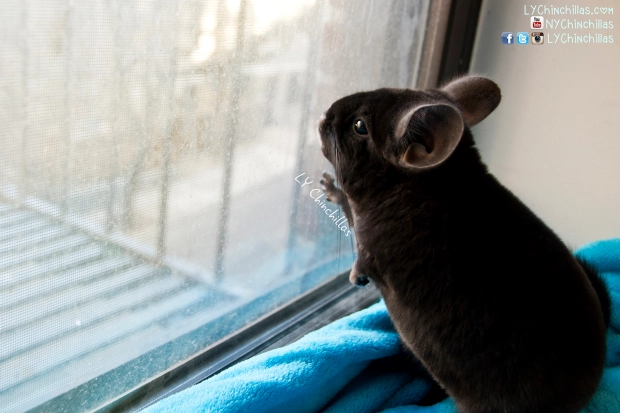
Koko Window

What is a chinchilla? A chinchilla is super soft crepuscular rodent, native to South America’s Andes. Simply because these animals have a rodentia classification, they are no ordinary rodent: they are extremely clean, beautiful animals with a great depth of emotive and intellectual capability. Their name means β€œlittle Chincha,” named after the indigenous Chincha people of the Andes. Crepuscular means that chinchillas are most active at dawn and dusk. It is a common misconception that chins are nocturnal, as they are not. In the wild, they’ve been known to live at high altitudes in herds of up to over 100 chinchillas, but as a pet, can be very picky about which chinchilla(s) he or she wants to live with. Chinchillas have poor eyesight but a strong sense of smell, hearing, and through their whiskers, touch. Through their whiskers, they can sense pressure changes and vibrations. They also have excellent memories and are incredibly fast, agile, and can be very high jumpers. Chinchillas are very intelligent and have specific personalities and preferences, which means it can take quite a while to bond and get to truly know your chinchilla. How long can a chinchilla live? Chinchillas can live upwards of 20 years with strong genetics and a healthy diet, although the average is 12-15 years. Chins are no short-term commitment, meaning that a lot of consideration must be made prior to buying your first chinchilla. Your heart may start in the right place, but due to your wallet, growing family, or lost interest, you may put a sweet chinchilla out of a good home, causing this intelligent and emotional animal to become neglected and end up in the hands of someone who doesn’t care to research a chinchilla’s needs as well as another first-time owner. In such a case, you are encouraged to reach out to a chinchilla rescue and research the best options for your pet.

Muff Cuddle Buddy

Are chinchillas considered exotic pets? Chinchillas are critically endangered animals, having been hunted to near-extinction for the profit-hungry fur industry – 90% killed off in the wild in the span of a mere 15 years. They are indeed exotic (although not in terms of import/export in the United States) – there has yet to be extensive scientific research on their species, in terms of intellectual, emotional, or physical capabilities, outside of some agricultural uses. Most of what chinchilla owners know beyond the very basics is based largely on first-hand experience, opinion, or what we have gathered about chinchillas prior to hunting them out of the wild. Since chins have been domesticated, bred in captivity, and raised as pets, chinchilla breeding has become an art of sorts – with very beautiful colors (i.e. Blue Diamond) and variations (i.e. Royal Persian Angora and Locken), in extremely exclusive markets (i.e. select markets have refused to sell to others, keeping the costs of certain variations of chinchillas in the high thousands). Aside from color mutations and breeding variations, chinchillas are all-around very special animals, with special needs. A few of these needs are:

  • Temperature: chinchillas can overheat at temperatures over 75Β°F, as they do not have sweat glands. Chinchillas have 50-100 hairs per follicle, as compared to a human’s 1 to 1 ratio. They are built for high altitude, cold environments with very low humidity. Owners are responsible for recreating that environment – it’s suggested to keep your chin’s living space between 60 and 70 degreesΒ Fahrenheit (still comfortable for owners, safe for chinchillas). Red ears are a sure sign of overheating: if your chinchilla is too hot, be sure to place him/her in a cool environment with a cool slab of granite and closely monitor his or her water and food consumption. Be sure to always have a 24-hour exotic vet’s contact information on hand, in case of emergency.
  • Diet: Chinchillas should be free-fed, and they have very specific diets (and very sensitive little tummies!). While they can over-indulge on any plethora of treats, they cannot overeat on their diet basics: high quality chinchilla pellets and fresh Timothy hay. Read up on my version of a safe chinchilla diet here.
  • Teeth: Dental care for chinchillas is critical for a healthy lifestyle. Chin teeth are constantly growing, and need to be filed down with wood chews to stay healthy. There are quite a few dental problems that can occur, rising either genetically or through poor care. It’s imperative to have a plethora of safe woods and chews readily available for your chinchilla and check for any changes in consumption or behavior, as changes could be a sign of dental problems.
  • Health: Chinchillas require careful monitoring, as they do not show illness or pain very visibly. They are unable to communicate in the way a dog or cat could whine, as some chins are not very vocal. It’s necessary for owners to constantly monitor food and water consumption, as well as β€˜output’.
  • Cage: Ideally, chinchillas need spacious, non-plastic, multilevel cages with safe wood platforms and other elements to encourage chewing and prevent boredom. Additionally, wire bottomed cages can create a condition known asΒ ulcerative pododermatitis, or “bumblefoot”, which is a bacterial infection that occurs from calloused feet. It’s important that if you have a wire cage, offer many areas where the wire is covered with fleece or replaced with hard flooring. Read up on how to build your own custom chinchilla cage here.
  • Exercise: Chinchillas need a good amount of safe room for exercise and stretching their furry legs! Everything in your chin’s exercise space must be chinchilla-proofed – tight spaces must be closed off, sharp objects put away, wires and molding hidden behind blankets or cardboard. It’s necessary for owners to be present and active watchers during playtime, in case something goes awry. Chinchillas are like babies – they truly need constant supervision. Read up on tips for chinchilla playtime here.
  • Cleaning: Well, chinchillas are high maintenance. You’ll find yourself vacuuming, dusting, sweeping, filling food bowls, hay racks, and water bottles, sneezing up dust and hay particles left and right. It’s no glamorous job, but owners have to do it daily. I would say that upwards of 33.33% of my relationship with my chinchillas is active cleaning or feeding duty.

Mitty Cage

Are chinchillas easy to care for? No. Do not be fooled by pet stores or oblivious owners. If you are a caring owner, chinchillas are not easy pets. Be prepared to spend at least an hour a day with these guys, especially if you want to bond with them. My family has often told me my energy and time dedicated to my 5 chinchillas is very similar to owning a mid-sized dog (albeit a dog that can live up to 20 years), and I wouldn’t disagree. It requires just as much time, money, energy, and emotion to adequately provide what I consider to be a happy life for these guys. Does it get easier? Yes. With time, routine, and a little bit of help from your loved ones, caring for your chinchillas is like riding a bike – still takes energy, but you get stronger with experience.

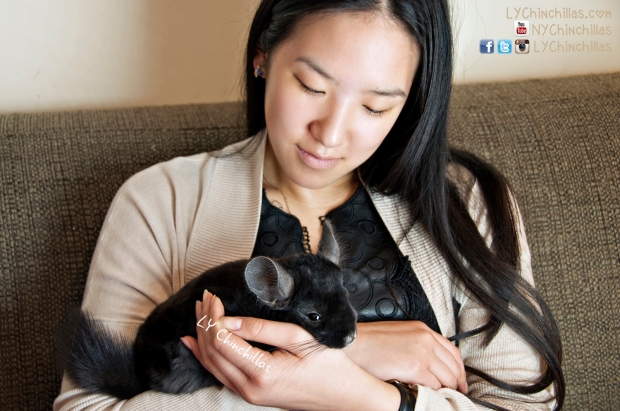
Ellen and Koko

Why do chinchillas need dust baths? Because chinchillas have around 60 hairs per follicle, their fur is the densest in the world. Their fur is so dense that they cannot contract fleas, nor bathe in water to clean themselves. Their fur is not be able to dry naturally and could create deadly fungus or other skin conditions if not treated immediately (AKA carefully blow-dried on the coolest setting). In the wild, chins bathe in volcanic ash to ensure the richness and cleanliness of their dense coats, which helps to remove moisture and oil. In captivity, chins bathe in a very similar dust (created from ultra-fine aluminum silicate powder), often branded as Californian blue cloud dust. If your chinchilla has dry skin problems (this can occur in dryer times of the year), dust 2-3 times per week. If your chinchillas have no skin issues and love to dust, daily dusting is totally fine!


What items do I need/should I buy for my first chinchilla?

  • Cage: Try at all cost to avoid plastic, which most chins will chew up, and as mentioned before, cover wire bottoms. Cages should be multilevel, spacious, and if you have the time/energy, you should build your own! It’s suggested that chins should have a safe wooden house to hide away in while they become accustomed to their new environment.
  • Food: High quality pellets and a variety of hays (Timothy should always be available and the foundation for your chin’s hay diet). Read up on my version of a good diet here.
  • Wood and Chews: The more, the better! Woods and chews prevent boredom and encourage teeth filing. Read up on your safest options here.
  • Ceramic Bowls: One for hay and one for pellets! Ceramic tends to be most popular, but I also use some very thick bottom-heavy glass bowls – it’s important to ensure glass bowls don’t tip and aren’t movable. If you’re able to affix these to your shelves, that would be for the best. Chins love to tip bowls over. I would suggest a hay rack as well, but certain types are chin-dangerous in their structure, so I would avoid using a rack until you do a bit more research about what works with your particular cage and what will be safest for your setup.
  • Glass Water Bottle: Avoid plastic! Chins will chew right through them, leaving them without water and a big mess.
  • Dust: Blue cloud dust is widely available on the web, and can be bought in bulk quantities if needed. I start with 2-3 cups of dust in my container, reuse that quantity daily for all my chins, and add a half cup every week. It’s best to use a mostly closed container with an opening for fresh air. Remember to dust in a confined area because Dust. Gets. Everywhere. It’s important to note that not every chin needs to be dusted daily; mine do because they love to dust, have no dry skin issues, and we live in an area with moderate humidity.
  • Granite or Stone Slab: Chinchillas need to stay cool, as you now should know. A slab of granite or polished stone will do nicely for a nice relaxing place to sleep, although it is in no way a replacement for the proper environment and temperature!
  • Air Conditioning Unit and Thermometer: Yep, this is a step that’s critical for the warmer times of the year! Chinchillas don’t have sweat glands and are densely surrounded with fur, so they need to stay cool year-round at temperatures 75Β°F and below. Over-heating can be deadly, so don’t skimp on this one!
  • Food Scale: Most commonly, chins are weighed in grams. Due to genetics, diet, and other factors, full-grown chinchilla weights can vary dramatically, from 400 g to 1200 g+! Most chinchillas are considered full grown around 8-18 months, so they should be constantly growing until then. As aforementioned, since chinchillas aren’t very expressive, their weight is a great way to see how they’re doing, and to determine the possibility of illness or injury. Any sharp decreases in weight should warrant an exotic vet visit ASAP. I keep record of my chins’ weight daily, so I know that there can be quite a variance in their weights on any given day due to consumption level, time of day, and other factors. Weights can fluctuate up to 20 grams a day, but as long as overall trend is upwards or at least the same over a period of 2-3 months, I’m happy. Read about how to weigh your chinchilla here!

Start there, and learn as you go! Sure, as time goes on you’ll probably look into a wheel, hammock, cuddle buddy, and other fun accoutrements for your pet. But basics are basics, and that’s what this post is all about. I hope you find this helpful, and feel free to share with your friends and acquaintances – you know, the ones who ask, β€œWhat’s a chinchilla?” πŸ™‚

LY Chinchillas Treat Donation

Donate healthy, delicious treats to LY Chinchillas to help keep our content going!

$5.00

How To: Bond With Your Chinchilla

Here we are traipsing the threshold of 2015, and it’s golden skies and sunny days as far as the eye can see (optimism, optimism!). Instead of writing a post on this year’s reflection (which, if you do want to read, I’ve already written), I’m going to instead share something that could be useful to you and your sweet furry pets in the new year – especially for all you new chinchilla owners. Today’s post will be all about best bonding practices!

There are a few major pointers I’d like to make to cast an umbrella over the whole of this post, which I think are good fundamental rules to follow in the entirety of your relationship with your pet:

  1. Set realistic expectations. Try very, very hard not to idealize your relationship with your chinchilla. A lot of chinchilla owners become disheartened when they learn their adorable new pet doesn’t seem to reciprocate their feelings. Be ready to be disliked or apathetically treated for months! The need for instant gratification is something we have become accustomed to in our society, but it shouldn’t be automatically transferred to human or animal relationships. The crux of good relationships take time, energy, and more time.
  2. Chinchillas are people, too. What I mean by this is, chins have exuberant and specific personalities and great memories. They resemble people in their ability to feel emotion, have thoughts, and hold opinions, although they are not able to express it in ways that appear clairvoyant to humans. Chins are all different, with different mannerisms, idiosyncrasies, and intelligence levels. So to say, not all chins should be treated the same way and it’s necessary to try your best to come to an understanding about who your chinchilla is.
  3. Above all, take your time and stay positive. Anyone who has successfully bonded with their chinchillas will be able to tell you that it’s one of the most rewarding processes and relationships they’ve been able to build. You won’t get there if you give up! It’s brick-by-brick; Rome wasn’t built in a day; take it slow and keep a steady pace with your bonding techniques, and you’ll get there eventually!

Mom Ellen and Koko

Step 1: Introductions! When you first meet your darling chinchilla(s), there will be a great deal of confusion on their end. They’ve likely been through the ringer on the first day in their new home, what with transport, new smells, sounds, and vibrations. Hopefully, their last owner provided you with some of their pellets so you can make an eventual transition to their new feed over the course of several weeks. If not, they’ll have the added stress of a new diet to deal with. It’s important to be understanding during the first few weeks. They will be understandably skittish and scared – but don’t worry, chinchillas are extremely adaptable, resilient, and curious, and will come to know their cage and environment within a day or two. Some owners have found that having a television on by the cage has helped alleviate stress during a move and acted as a distraction for their chinchillas during times of change. In this initial introductory period, you should spend time around your chinchilla, but should not force them to leave their cage or be unwillingly held if not needed. It’s always helpful to speak quietly to your chinchilla in a calming voice, allowing them to become familiarized to your baseline temperament. Once your chinchilla begins to feel safe and the introductory period is nearing an end, you’ll notice your chinchilla approaching you with curiosity and willingness. In some cases, this can happen almost immediately with a very social and friendly chin – in most cases, the process takes much longer, up to several months. In the meantime, it’s time for Step 2.

Mitty Under Couch

Step 2: Develop a Routine! Adopt a healthy diet, dusting routine, and cleaning schedule for your chinchillas. Feeding your chins should be a daily exercise. Free feeding pellets is the way to go; hays and pellets should be re-upped every day to ensure maximal freshness. When you’re in the cage, be sure to say hi to your chinchilla and remind them what a great job you’re doing as a parent. As far as dusting goes, since my chinchillas don’t have dry skin issues and all love to dust, I have a dust compartment separate from their cages that I allow them access to every day. Since it’s a controlled dusting environment and not a free-for-all, I use their dusting time as an opportunity to pick them up, hold them briefly, and weigh them daily. I’ve found that this daily routine has helped me bond with my chin-kids, learning how they like to be picked up, how long they can tolerate a cuddle, and reassuring them that I’m still here for them. Additionally, it’s helpful to objectively weigh their growth – based on water and food consumption and time of day, chinchillas can gain or lose up to 20 grams per day, but as long as the overall trajectory is weight gain and not loss, there isn’t much to worry about. All chin owners know that cleaning is needed almost daily. Deep cleaning occurs perhaps once or twice a week, but some minor tidying is a daily task. During this time, I like to sing to my chins, even though human bystanders insist they’re begging me to stop (I know the truth: that they LOVE it).Β  The importance of routine cannot be overlooked – it’s the daily interactions that amount to aggregate care. Nobody said caring for a chinchilla was easy, and if they did, they were wrong! It does gets easier though, once you adopt a manageable schedule and supportive network.

Koko Wheatie

Step 3: Playtime! Given your chinchilla is over 6 months old, you can let them out for playtime once or twice a week. Eventually, as long as you have the time and energy to supervise a safe playtime session and know your chinchilla well enough, even daily playtime is fine. I’d suggest starting out in a bathroom or closet for 10 minutes at a time, sitting with them and allowing them to learn and explore the space before moving on to a larger area. To read more about playtime tips, read this post. Not every chinchilla is fond of playtime, some prefer their cage. However, playtime is always a great way to boost trust and confidence in one another, getting to know your little friend through exploration. The more attention and interaction you give your chinchilla, the better their quality of life and the more satisfied they’ll be in their home. Boredom can be a killer for any species, especially for intelligent, active, caged chinchillas. Stimulation is critical for their health and happiness – physical activity can help ebb the issue of containment or inactivity. Hopefully, in addition to a great playtime, your chinchillas have access to a large, spacious, and fun cage where they can explore, chew, and entertain themselves during your off hours. If not, you can look into building your own cage for them! It’s a lot of work, but a lot of reward as well.


Step 4: Lots of Love! There are a plethora of ways to continue on the bonding process. Offering scratches to your chinchillas behind the ears and under the chin can be a great way to bond! For chinnies that don’t want to be scratched, chew toys are always a great peace offering. Teaching your chins that you feed them, bathe them, and treat them helps to develop a great maternal or paternal relationship with your chin-kid. Essentially, any amount of quality time spent with your chinchilla serves to improve human-chinchilla relations, bringing you and your chin closer each day. It’s the little successes that often make us happiest, since these little critters can’t speak or sing or shout about how much they love us. There’s really nothing that can replace the time and energy spent towards great care. We can only do the very best that we can do. Your chinchillas will come to respect you and appreciate you, and simply take you for granted. But, isn’t that just the joy of it all anyhow? You see, that’s the ultimate takeaway from all the hard work that goes into bonding with your chinchilla. You’ve just come to the end of this lengthy article on bonding, but the truth is, if you are a great pet owner, you’ll do everything you can for the animals you love, expecting absolutely nothing in return. Just safety, health, and happiness! That’s our motto – Happy 2015 ya’ll!

Muff 2015 2

Don’t forget to keep in touch with us – YouTube, Facebook, InstagramΒ andTwitter! Follow us into the New Year! πŸ™‚

LY Chinchillas Treat Donation

Donate healthy, delicious treats to LY Chinchillas to help keep our content going!

$5.00

Chinchilla TLC: Toys, Love, Care!

As we know, the holiday season is in full swing! As we cross off Santa’s ever-expanding list for family and close friends, we turn to our chinnies for a sweet, longing gaze. I heard you, buddy. I know what you want. Let me grab my Santa hat, hop online, and get to ordering your holiday stocking stuffers. Who could say no to such sweet faces?

Around this time of year, I spend a few hundred on the little guys, most of the money going towards stocking up on diet essentials and safe chew toys. Not only are prices competitive, running on a fever from Black Friday deals, but delivery is prompt and customer service steps up its game. The earlier, the better, though – the closer you push towards Christmas, the crazier the frenzy on all operational fronts, increasing the chances of higher prices and sloppy service.

Christmas Lights NYC

This year, we opted for a mix of willow balls, a few fleece hammocks, apple sticks, sisal toys, mulberry sticks, and a variety of wooden coins! Nothing too special or different from their usual mix of toys.


I think it’s important for us all to remember that it’s not necessary that we spend a great deal of our babies in order to have a fun time this holiday season. A playtime favorite for us is building and playing around in cardboard mansions! They’re free to make and safe, as long as you keep a good eye on your chinchillas. Cardboard, if ingested, can expand and cause blockages that may lead to health issues. However, if you are an active participant during playtime, you can prevent issues before they arise. I created and modified a three-story mansion as my Cyber Monday deliveries rolled in, and the kids simply loved it! The funnest part about creating toys, cages, and mansions is that you are free to modify whenever you want, offering a new feel every week. The more creative you’re able to be, the less you’ll have to depend on others for your fun chin toys.


Oh, and our holiday photo shoot was a great success! We love taking photos and sharing our images with the world. We’re even considering making cards in the future and offering chinchilla photo shoots for interested owners! Of course, all these great additions will come with time and growing interest. For now, enjoy our videos and posts! Stay tuned and subscribe by email for next Wednesday’s blog post.

LY Chinchillas Treat Donation

Donate healthy, delicious treats to LY Chinchillas to help keep our content going!

$5.00


Chinchilla Holiday Cheer!

As the chestnut praline lattes spiral gloved hands and Christmas tree shops begin to adorn every corner, it’s inevitable to fight it – Holiday Cheer is headed our way! As soon as the Thanksgiving bird is carved, Christmas sparkle starts to infiltrate our spiced cinnamon veins, trickling slowly to our pulsing glitterati hearts. We love this season!

LY Chinchillas Holiday S

The city has been absolutely glimmering. With the bittersweet entrance of winter, we start bundling up in hats and scarves – and we can’t help reminiscing about yesteryear and futurescape. The falling leaves, the harsh wind’s kiss, the soft flutter of snowflakes. It’s important to remember: yes, while this time of year is tough and frigid, it’s romantic as well. This time is as important as any other in our lives. After all, we’re together for now, aren’t we?

City Holidays LYCs

While we’ve had a barrage of family visiting from nearby states and overseas alike, we’ve found a way to incorporate chin-love into the center of the holidays. Sure, we traipse the incredibly shimmery streets of New York City during the day while the chins are snoozing, but upon our return, we shower them with holiday cheer and endless love! That’s what the holidays are all about – forcible cuddling (just kidding!), delicious treats (sparingly!), and family.

And yes, of course – I conducted a full-on holiday photo shoot. No shame, only props and sweet misbehaving chinchillas! Photos will be released on our Facebook Page throughout this lovely month! I’m also thinking of doing another shoot with snowflakes and drums (think snowy little drummer boy scene) – but we’ll have to wait til the excitement of this week’s shoot has calmed a bit. Luckily, this shoot required no treats and that is a great thing – it means more shoots and more obedient, healthy chins.

That doesn’t mean, however, that the lucky babies don’t get any treaties! We all need a special little something from time to time in order to ensure our ongoing sanity. That, my friends, is how I spent my Black Friday weekend – buying family gifts and getting myself a little something as well. πŸ™‚


Anyhow, as things are regulating lately, I’ll be posting every Wednesday here on the blog! There will be daily postings on Instagram, Twitter, Facebook, weekly on YouTube (be sure to subscribe!). The whole family wishes you a great start to your December!

LY Chinchillas Treat Donation

Donate healthy, delicious treats to LY Chinchillas to help keep our content going!

$5.00

Chinchilla Thanksgiving

After spending a lovely evening on Fifth Ave with my adorable sister, we sit down for a slice of cake and a spot of tea. The lights shimmer on the streets outside, heavy with a festive sparkle. The window displays drip with gaudy exuberance, enticing tourists and shoppers alike. Year after year, the decor outdoes itself, the budgets double, and the holiday mania ensues in the same deliberate fashion. This is the center of commerce, New York City – encapsulating the dreams, hopes, and desires of each and every generation. We try our best to avoid it, but every year the glitz of ‘Christmas before Thanksgiving’ jolts us into the holiday spirit, regardless of its true monetary intentions.

NYC Xmas

We find a place in the plaza, settling in with our 20-layer crepe cake and strawberry tea. She’s so bright, and the conversation follows suit. We discuss the upcoming holidays, the changing weather, and the state of the union. During our chit-chat, the soft blur of Thanksgiving appears like a warm veil over my eyes. I hug her, and tell her I love her.

Sis and Me

In honor of this year’s Thanksgiving, I’ll be sharing a little bit of what I’m thankful for. And as a preface, it won’t be the city lights, the bustling crowds, and the freezing temperatures – although, sure, that’s all a part of it. It’s about my babies – the five little souls that fill mine with such thanks and appreciation for the present moments; the inevitable ‘growing up’ of it all, and the ‘do your best’ attitude that has become increasingly more profound as the years pass.

Koko bear – As the youngest and darkest ball of fluff in our ‘Haus of Maus’, I’m thankful that Koko is sweet. She’s incredible – bouncing about from corner to corner, accepting our scratches, and smiling happily with her little overbite. Definitely functioning with a glaze over her little teddybear eyes, Koko is a warm, fluffy cuddle monster! The only chinchilla I know that will allow true cuddles and sleep right in my arms.

Fifi – I’m thankful that Fifi is a wildchild. She’s uncontrollable and inconsolable at nearly all times – darting around and constantly speeding through life. It’s as if in every situation, Fifi truly believes she is constantly escaping death. She keeps us balanced, patient, and forces us to slow down and appreciate the calmer moments in life.

Lulu – Lulu is an adorable sweetheart. Keeping her sister Fifi in check, she has a cool head and a curious, lovely demeanor. With her eyes close together and a fat butt, watching Lulu is a smile waiting to happen! When times get tough, I look to Lulu for a quick pick-me-up – and for that, I’m thankful.

Mufftoneous – I’m so thankful for Muff! What a gumdrop jelly bean teardrop! How much jolliness and joy can one confused chinchilla bring a person? INFINITE! He is such a vocal, silly, adorable little guy! He is not a brilliant chinchilla so to say, but he always gives us a big laugh!

Mittenmaus – As the firstborn, Mitty has a special place in our hearts. He opened the door for all the other babies, and we couldn’t be more thankful. On top of the happy change he has led to, he remains the most intelligent chinchilla we have. Known as ‘the engineer’, he’s always searching for a way into the ‘real world’ – I swear, if it were up to him, he’d rock a suit and tie and sit at the head of our dinner table, nibbling a shredded wheatie, directing conversations and speaking on politics.

Thanks for stopping by today and we’re all wishing you a VERY Happy Thanksgiving! πŸ˜€

LY Chinchillas Treat Donation

Donate healthy, delicious treats to LY Chinchillas to help keep our content going!

$5.00

Tips for Chinchilla Playtime!

As all chinchilla owners know, chins are high energy and high maintenance – there’s no sugar-coating it! We go out of our way to provide safe multi-level havens for our babies, order them the finest foods, and hope that one day they’ll come around and show us some love back! A major part of chinchilla health and bonding is playtime. Playtime is critical for chins, as it gives them a chance to discover a new environment, stretch their legs, and get to know their owners a little better.

Get to know your fluffball. Playtime is an incredible way to get to know your little babies. Chinchillas have abundant personalities, and you miss a lot of that while they’re in their cages. Letting them out will encourage them to approach you (as so oftentimes it’s the other way around) and share their squeaks, leaps, wall jumps, and more with you! I encourage all owners to be very aware of their chinchilla’s behaviors – study them: their idiosyncrasies, movements, and physical characteristics. Any change in personality or behavior can be indicative of a health issue and should be carefully monitored – but you need to know your chinchilla’s baseline personality in order to detect any semblance of a change. There are a lot of health issues or injuries that can be fixed simply by detecting them early, and to put it simply, you can’t catch it if you aren’t looking.

Be present at playtime. Watch them like a hawk! – at least, keep a very watchful eye when you first start letting your chinchillas out. As you get to know your chins, you’ll be able to know which ones respect authority more than others, which ones you can trust around the furniture, and where they like to hide. There’s nothing more terrifying than fearing your chinchilla has dissipated into thin air when they’re actually snoozing under the couch – true story.

Set your boundaries. Many people like nice things, chinchilla owners being no exception (in fact, I think we have the best taste). So, it’s natural to be apprehensive letting your chinchilla out with such lovely molding, fabrics, and wooden furniture strewn about – chins are known for filing their teeth on wooden toys, and they don’t care whether that toy is your bed frame or an appropriately sized apple stick. It’s critical to set your boundaries and take up a stern talking with your chin. The easiest place to start for most homes is the bathroom or closet, as it’s a confined space and easier to spot a misbehaving chin. When you feel comfortable moving into a larger space, start in the new space by keep the playtimes short and working your way up. Trust is something that is built over time, chinchilla-human relations being no exception.

Chin-proof the playroom. The method I use for training my chinchillas not to bite my things starts with me. As people, we are responsible for our furniture, rug, walls, and important documents. No one can protect these things better than ourselves. Oft, it’s as simple as moving something important out of reach or closing the drawers. Chinchillas are so curious – you really can’t blame small animal instinct for why your favorite book (or camera, or passport, etc.) got destroyed. If you can see it, they can probably get to it. There is always a way. So put the birth certificates away, remove the climbing mechanisms, tape cardboard against your molding (make sure the tape is not reachable), shove pillows and blankets under your couches and around your radiators, and close those windows. When you’re done, you’re probably still not done. Those little buggers are more compact than your foresight will lead you to believe, and aren’t scared of venturing where no chin has gone before. It’s best to simply be there and catch them before they do the deed.

I know many owners have playpens, and I’m all for that – but if you have the time and energy to expend on chin-proofing, you’ll find it’s a much more interesting experience, allowing them to be more fully integrated into your space, if only for a moment.

Train. I don’t use treats when I train, I simply use the concept of ‘playtime’ vs. ‘home’. If they want to be out, they have to be good. If I see someone lingering by a wall for too long, I’ll say his/her name in the same manner I’d speak to a disorderly 4-year-old or a misbehaving dog – I’ll utilize the don’t you dare tone. They will hear you, and if they know you well enough, they’ll turn to you and be aware that you are talking to them. Sometimes they’ll stare right at you as they decide their playtime fate, chomping into a picture frame or art piece. Then, they’re headed home to think about what they’ve done. Less intellectual chins may never put it together, wondering with the same fascination each and every time why they’re going back to their cage! However, most chins will begin to see a trend in playtime consequences and learn what they can and can’t bite. I leave chew toys out for them, and allow them to bite on certain furniture such as my barn wood table and wicker chair. Everything else will simply buy them cage time. Again, you must be present in order to train. You can’t be sending mixed messages while they’re out (i.e. when you’re lazing they can bite, when you’re training they can’t), as it defeats the consistency required to teach & learn. If my chins are good, they can be out for up to 45 minutes before they decide they want to fall asleep, tap on the door to go home, or need a sip of water. I’ve found that some of my chins are now able to communicate their needs to me, which is extremely rewarding to recognize.


Enjoy and take your time. My chins are my children. I love spending time with them! They are badass kids at times and don’t care at all for what I have to say. That’s fine, they’ll learn – and, don’t tell them, but if they don’t, I’ll still love them. And watch out for them, and take care of them, and make sure they are safe and healthy. When playtime is over, be sure to collect your chinchilla carefully! Do not rush that final process, and if your pet escapes your clutches, do not panic. Be patient and coax your kids back into your arms or their cage, as long as it takes. I have heard too many horror stories of owners losing their chinchillas by stepping on their beloved pet accidentally, or falling on them when chasing an escaped chin. With all your might, try your best to avoid thoughtless and tragic accidents. Safety first! My best advice is to just take your time – don’t force it, and be genuine. If you love them, they’ll know – and on some level, they’ll reciprocate. Enjoy their company and never stop doing your best. Patience, practice, consistency, and human foresight can all create an extremely fun and productive playtime for all.


LY Chinchillas Treat Donation

Donate healthy, delicious treats to LY Chinchillas to help keep our content going!

$5.00

The ‘LY Chinchillas’ Diet

Today, I’m going to share my chinchilla diet with all of you! Now, I’m sure that there are many amazing owners out there that choose differing approaches, and that’s not to say that any method is better or worse than others (although there ARE chinchilla basics to abide by). Every pet owner, like every parent, has their own opinion regarding best practices for raising their chin-children. That’s simply how it is. Different countries adapt different standards based on experience and availability. For example, French, Russian, British, and other global owners will all have slightly differing opinions on chinchilla care. I suspect their level of love for the furries are equal, no matter their distance from one another.

Muff Blue

To start, pellets! As the foundation of my chins’ diet, I use Manna Pro SHO. Although Manna Pro SHO is a show quality rabbit food, it’s known to breeders and owners alike to be chinchilla-safe. Most rabbit foods are NOT chinchilla-safe, and I would advise against using most any foods intended for other small animals. About a year ago, I began mixing the feeds because after a brief trial run, it became evident that my chins were eating more with a combination of the pellets than with either alone. Although I started with a mix of Manna Pro and Mazuri, I found my chins to respond much better to Manna Pro SHO alone and decided to absolve Mazuri of its duties (over the course of several weeks, of course). Again, it’s all about preference and quality.

Another basic element of my chinchilla diet is hay. I use 2/3 mix Timothy hay and 1/3 mix Orchard hay or another variety of grassy hay. I feed alfalfa hay twice a week at the same amount as the Orchard mix. I feed more to Koko, my youngest. Alfalfa is great for growing chinchillas and higher in protein and calories, so it makes for a delicious snack. I know some owners have picky chins, but hay is an essential part of healthy eating for chinchillas and should always be readily available for them – I’d suggest trying out different brands to find your chin’s favorite. I personally prefer Kaytee brand for most of my hays, as they are easy to find in my area and cut at a nice length, enough to serve without huge pieces or too many loose pieces (which chins won’t eat). Oxbow is a close second, if Kaytee’s not in stock.

Now for the accoutrements! Aside from hay and pellets, I like to offer a variety of consumptive elements for my kids. Let me stress that hay and pellets should be 95% of their diet – the higher quality pellets and hay, the less your chin will require anything else. A semblance of choice is always great, but the basics should always remain fresh and available.

The safest and most necessary of these fun additions is wood and chews! Be sure to check out this list of safe woods and chews. The reason these elements aren’t part of the 95% of their diet is because chins chew these goodies more than they actually eat them. Chins love wood! Their teeth are constantly growing, and wood chews are necessary to keep them filed down. To start, I have custom-built a cage to include all kiln-dried pine ledges and houses, which ensures that without adding any chew toys, the kids are still adequately able to file their chompers. Then, I pick out or harvest additional wood for them to enjoy, such as apple, pear, or other safe woods. The little apple sticks are their favorite! Loofahs, pumice stones, and other safe chewy elements are also great for them to chew. My avid dusters Muff and Lulu will chew on the stones and then attempt to bathe! πŸ˜›

As for food treats, it’s important to moderate consumption, and be sure to avoid giving treats to chins younger than 6 months old. Their growing bodies need to develop before incorporating treats into their diet. However, when chinchillas ready for treats, a big go-to for me are shredded wheaties! The spoon-sized sugar-free version of the cereal is a delicious wheat-based treat for the kids. They love the big crunch and the perfect portion. I’ll give them half a piece of shredded wheaties once or twice a week. Sugar-free Cheerios are also fun, but they contain more additives than the shredded wheat, so I’ll toss them a piece every few weeks. These treats are in no way a replacement for actual pellets or hay!

Another nice treat for them are herbs and select flora, such as rose hips and marigolds. My chinchillas love these additions, but they are only offered once every few weeks. It’s important to research herbs prior to consumption, because most herbs contain medicinal properties.

I also created a little supplement for my chins, consisting of organic rolled oats, a pinch of wheat germ and cold-milled flax seed. While I respect that many owners feel that supplements are unnecessary, I’ve found that the mixture stimulates overall appetite, and is perfectly safe. I portion out about 1 teaspoons every 2 months.

A more “dangerous” treat for chins (quotations because of highly varying opinions) I allow my chins are three types of dried fruits: dried apple, dried goji berries, and more rarely, dried mangoes. I’ll give them one (not all three) of these treats once every 3 months, and very small pieces. They are high in sugar, which can lead to bloating and tooth decay in chins down the road, potentially shortening overall lifespan. However, as with humans and all of the world’s animals, moderation is key. Dried apples, mangoes, and goji berries are, in my opinion, better than craisins and raisins for the simple fact that they have a lower sugar content dispersed in a larger piece of the fruit. Raisins and craisins have a lot more sugar packed into a tiny little area, making them more dangerous for chins in the long run.

Finally, the most controversial treats of all: nuts. I know owners love to crucify one another for feeding chinchillas nuts or seeds. I can see why – setting a precedent for other owners is a sticky thing – we all learn from one another, and gain knowledge from experience. That’s why I carefully approach this subject. Many are quick to say that chinchillas can’t digest fat. It is not true that chins can’t digest fat. They can; they simply cannot metabolize a lot of it (so to say, a diet high in fat and oils). A rare treat of an almond or sunflower seed benefits them with a safe dose of essential fatty acids. Being a responsible chin owner means knowing the difference between a rare treat and a safe treat is (yes, such as wood chews and select herbs and hays like alfalfa). I understand folks out there can see a video or a photo and think that owners like myself are perpetuating the idea that almonds and nuts are okay as frequent treats – but that’s not true, nor is it the intention. Nuts are not inherently deadly to a chinchilla, they are simply very unhealthy if intake is not strictly monitored. It’s ultimately a chinchilla owner’s responsibility to research safe, healthy treats to give to their pet. After speaking to breeders and owners alike who have cared for chinchillas that have lived up to 20 years, I’m not entirely convinced at the searing level of scrutiny placed on chinchillas consuming nuts – although yes, it does have some merit. I personally will allow my chins a sunflower seedΒ or an almond sliver every 3 months. Please note these quantities are very, very low and I am insistent on low overall treat intake.

As a final note, I’ll add that I always stay far away from processed treats – even if they’re from big brand names – because there is not enough research to support how chinchillas react to chemicals and additives. However, if human response is any parallel, we can see how negative of a reaction chins might have! If a treat has too many elements or looks more like it should feed a human more than a chinchilla, I’d skip right over it and look for organic options, preferably something that has not been treated or processed at all. In fact, making your own pellet and hay based chinchilla cookie is downright delicious and safe! Read my recipe here.

And there you have it, folks! The LY Chinchillas diet! Feel free to comment or share, and definitely feel free to disagree with me. I have curated information from vets, breeders, owners, and my five chinchillas to come to my personal conclusions for what I believe are the healthiest and happiest ways to feed my chinchillas. I hope you do the same for yours!

LY Chinchillas Treat Donation

Donate healthy, delicious treats to LY Chinchillas to help keep our content going!

$5.00

Times Square and Chew Toys

Today was Saturday, and I am prolifically known by my friends and loved ones to be terribly boring and lazy on weekends. However, I had just learned that my photography had been published in a magazine sold only in Midtown Manhattan. Alright, I thought. Time to get out there and see the world! I made a phone call to the cafe, only to find they didn’t have the issue yet. Alright, that’s not gonna stop me – I’m feeling mildly inspired, so let’s bring my Nikon, go to Times Square to shoot around, and stop by the cafe just double check the issue’s release date. I gathered up my belongings, tidied up the place, and ended up spending a few hours laying on the living room floor with my mosaics running around my body like a pile of shredded wheaties.Β  Eventually though, I made it out the door.

After checking the cafe, I took a long walk around Midtown. The air stung, but the mood was vibrant.

NYC Times Square Logo

I walked by Bryant Park, with its bustling Christmas shops already in full swing, stopped by Rockefeller Center to take a look at the MASSIVE undecorated Norway Spruce Christmas tree, and toured around Times Square for a quick (and always annoying) galavant. The cold is seeping into the New York City streets, but it’s festive and foreboding of a much more frigid freeze to come. I was bundled, and grabbed some hot chocolate to warm my nose.

Minnie Maus NYC Logo

I saw a few middle-aged women in Times Square donning the garb of Hello Kitty and Minnie Mouse. I scoffed, thinking, you want to pass yourself off as a Maus? You’re no Mitty! It was around 8, and I was hungry. I thought about the chinchillas; I missed them so dearly. I always miss them, no matter how close I am to them. In the next room, sometimes. I definitely feel like all my motherly instincts were wrapped into one furry heart and delivered five separate ways. So, I headed home.

Then, came the more exciting part of my night – boiling apple wood branches to make chew toys for the babes! I had gone “apple-picking” a month or so ago and collected short branches from an adorable orchard in northern Connecticut. I boiled the pieces for 20 minutes and then rinsed and cleaned the logs under cool water with a bristly brush, to rid the debris. I placed them on a cookie sheet, baking at 300 degrees at 15 minute intervals until they were ready to chomp. I know chin owners have different methods for baking wood, but that was mine – and the chins loved them!

As soon as I got back, we let Muffton and Mitty out in rotations, as they are no longer compatible friends. When I first got them, they were bonded pretty well, and the fact that Muff was a little less intelligent than Mittenmaus didn’t divide them completely. Over time, they became more evidently unable to see eye to eye, despite being similar heights. Unfortunately, by the time the girls came along, they were finished with each other and squeaking to the ladies about how uneventful the other was and why they shouldn’t even sniff his way. Oh, well! C’est la vie. Sometimes bonded chins simply unbond – perhaps because of puberty, another sex entering the equation, or almost no reason at all.

In other exciting news, we’ve started a brand NEW YouTube channel, NYChinchillas! Be sure to Subscribe and stay tuned for the impeccable cuteness to follow! We’ll start uploading our arsenal of adorable videos starting today.

After an exhausting day out, I’m ready for my chin-feeding daily ritual and human bedtime! I hope you had a great Saturday and did something nice for your babies as well! πŸ˜€